
It seems like an objective truth that when considering The Beatles, they remain the most influential rock/pop group of all time. Of course someone can make a strong argument against the claim, and it is quite possible that you can prove me wrong. Nevertheless, it seems like a difficult argument to make.
Along with this, people have their own opinions on which album is the group’s best work. Early Beatles fans may say “A Hard Day’s Night,” when the songwriting techniques of John Lennon and Paul McCartney became a headline rather than a side note.
Or maybe “Rubber Soul” can be considered the best, as that was the record that transitioned their songwriting and music from the stereotypical pop hits into experimental rock. Therefore, they became a far more experimental group.
“Sgt. Pepper’s Lonely Hearts Club Band” is easily noticed as their most unique and interesting album, as it is generally considered, besides the Beach Boys “Pet Sounds” which came out a year previously, as the first modern concept album. The group in “Sgt. Pepper’s” used a multitude of ideas to create sounds that were never heard on a record before, whether that be the mixings of different instruments and voice pitches or the double tracking system in which George Martin (their producer) could generate a doubling of a particular sound. These platforms were heavily advanced throughout this album. Certainly, it’s the group’s most influential piece.
However, when considering the pure enjoyment of the album, along with the contributions committed by each band member, I would argue “Abbey Road” is The Beatles best LP.
Let’s start with the contributions. When listening to the album, it is clear that the Lennon-McCarthy songwriting phenomenon is at the center piece of it all. Particularly with the songs “Come Together” and “Oh! Darling,” we see the duo’s work at quite possibly its best.
However, it can be argued that the two best songs on this album aren’t even a product of the two stars of the band. Rather, it was the strength of guitarist George Harrison that is apparent once listening to the album in its entirety. Songs such as “Something” or “Here Comes the Sun” are generally understood as his best work, and these two songs are seen as his solely his work. Along with this, Ringo Starr had an appearance! The song “Octopus’s Garden” was a song that Starr wrote himself, with little help from the other members. That was a rarity for the drummer throughout his entire tenure with the band.
Since we are talking about the song list, let us not forget about side two of this record. The second half of the album is a 16-minute assortment or medley that consists of eight short tunes. It is all played in a single set, and it worked so incredibly well. From a technical perspective the medley is impressive, as it feels as if it is just one song. Also, the songwriting introduces issues that are generally highlighted by financial incompetence, which was according to McCartney influenced by the group’s frustration and dispute with their business partner in Allen Klein.
Not to mention, the medley’s final lyric remains one of the strongest the group has ever produced, stating in the song “The End,” “And in the end/the love you take is equal to the love you make.”
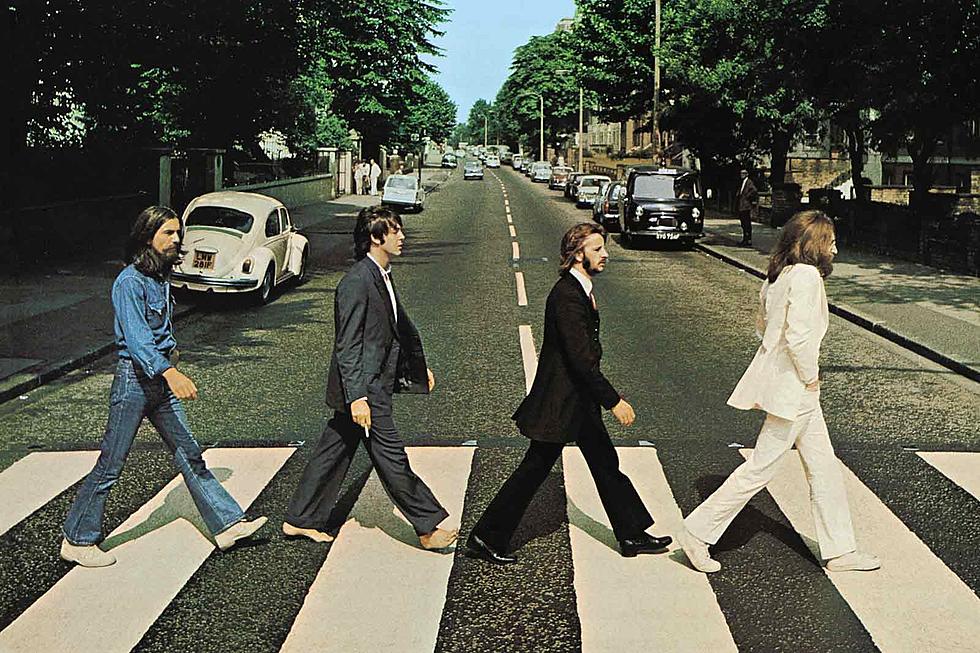
Another obvious distinction that makes “Abbey Road” so legendary is the cover, which sees the four members walking along a crosswalk near their studio outside of Abbey Road, London. It remains a picture that in a way personifies the group. When thinking of pictures you may have seen of The Beatles, it is common to visualize this cover. The obnoxiously white suite of Lennon. The rugged look of Harrison. The barefoot McCartney. The performance-ready Ringo. In a way, their outfits interpret each of their character’s perfectly.
Yet, with a group that released a total of 13 records over the span of 10 brilliant years, I understand how difficult it is to pick just one that stands above all. Actually, it is nearly impossible. For me, however, I still remember the first time I listened to the whole album. I was 14-years-old, alone in my room, and I remember it ending so quickly. I had a desire to listen to more. It felt almost incomplete. But I have listened to it almost a hundred times at this point, and I realize now that it was completed to perfection. It was the quintessential piece for finding the balance between easy-listening and complex music theory. It was flawless farewell letter from one of the greatest bands our world has ever heard.

 The Beat @APU