
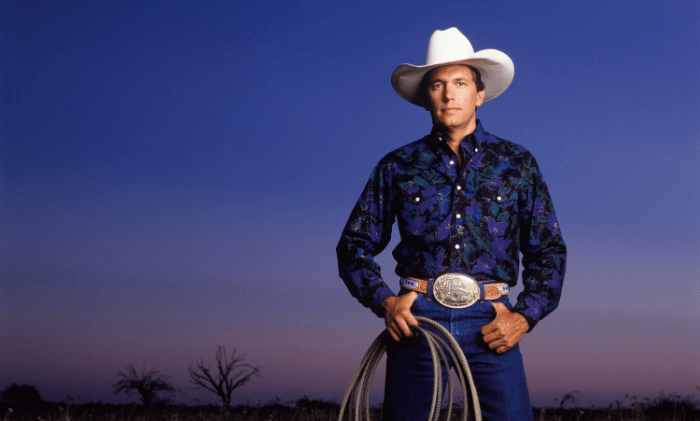
Country music has remained one of the most flexible genres of music ever. Who is the greatest to ever wear the boots and play the guitar?
Country music is purely an American craft. It brings a level of patriotism that not many formats of music can generate. The music is inspired from American folk music, which in itself has an incredibly rich history. From the outside, country music can be seen as simply hillbilly music. But when dissecting its roots further, it tells the story and lifestyle of the working class Americans of the Southern United States.
Along with these initial techniques of mimicking folk music, country music quickly transitioned into the contemporary music scene. Whether it took the gritty tone of Willie Nelson and Waylon Jennings or the upbeat style of artists such as Kenny Rogers or Dolly Parton, country music was one of the most prevalent music genres following the 1940s. So, how did this happen?
Well, country music began to reach the music charts after a man named Hank Williams came along. Entitled as the “Hillbilly Shakespeare,” Williams is often considered the father of country music. With hits like “Your Cheatin’ Heart,” “I’m So Lonesome I Could Cry,” and others, good ol’ Hank introduced a new category of country music; heartbreak. That alone changed the way country music was developed. Williams remains one of the most recognized songwriters in music history.
Of course, there is Johnny Cash. Williams essentially passed the torch to Cash, who immediately made an impact due to his incredible songwriting. It was also his ability to intermingle certain genres of, experimenting with rock, blues, gospel and other styles throughout his music career. His appeal was not only applicable to the Southern music scene, it was worldwide. Truly, he was the first country artist to do this with such force.
And then there is Garth Brooks. You simply cannot ignore the brilliance of Brooks. With 148 million units sold, Brooks is the best-selling solo albums artist in the United States. He hit a goldmine with his hit song “Friends in Low Places,” which spent four weeks at number one on the Hot Country Songs. In terms of commercial success, no one comes close to Garth.
But when considering who the king of country is, I don’t look at any of these guys. I look at someone who combines every element of being a country artist. Someone who lives the lifestyle. Someone who writes classics. Someone who has universal appeal. Someone who has commercial success that can somewhat mimic Brooks’. When thinking of this person, I immediately think of George Strait.
Strait, a Texas-born ranch worker, had everything it took to make it in the business. He had the cowboy look, probably more than any country artist had ever had before. He had the abilities on the guitar and the voice of a country messiah, as he grew up playing the instrument and eventually made it career after creating the hit single “Unwound.” It all worked for George, and he was placed in the perfect situation.
Country music was experiencing a shift throughout the late 70s and early 80s that left several true country fans disgruntled. It began to sound more like pop than anything else. A format of music that was meant to tell the story of the people who were not a part of the normalized American demographic was now being engulfed by its rival.
In this way, Strait was the messiah of country music. He brought it back to its roots from both a songwriting perspective and sound perspective. It was the fiddle, the pedal steel guitar, the acoustic guitar that sounded as if it was in pain. This was country music. Add all of this with the soothing yet twangy voice of Strait, and it just worked.
And it had a high demand, as he became incredibly popular. He remains one of the best selling music artists of all time, with 13 multi-platinum albums and 60 number one hits. Strait had brought country music back to prevalence, and the shift opened the door for country to make the incredible push it did in the 90s. Artists like Brooks, Shania Twain, Alan Jackson, Vince Gill, Randy Travis and others were influenced by Strait’s work, and throughout the 90s country music was back on top.
When taking all of this under consideration, perhaps it is an inevitable truth that Strait is the “King of Country.” He had it all, and he was eventually beloved by all. No longer was country music a tool to make a shift into the contemporary music scene. It was once again its own individual thing, and Strait was the man behind the process.

 The Beat @APU