
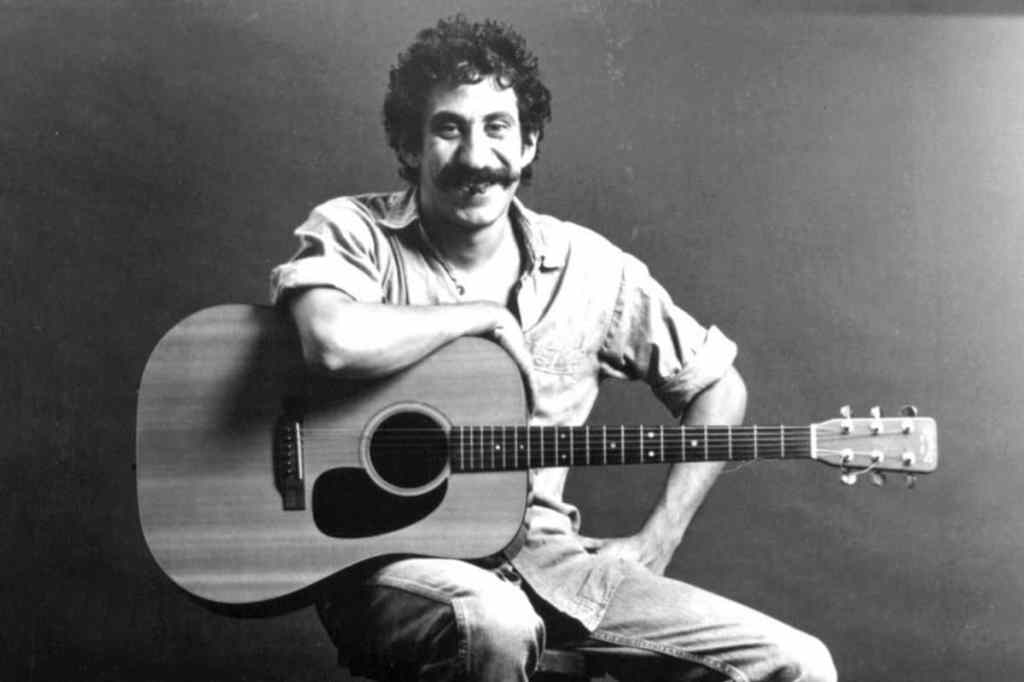
There are those songwriters that live in allure. McCartney and Lennon. Dylan. Springsteen. Joni Mitchell. Paul Simon. And rightfully so.
Yet I hear songs about the loneliness of a man in the Army who can’t find the heart to call the one he loves.
I hear songs about a gentleman working a lackluster job at a car wash, despite feeling as if he is capable of being an ultra successful artist.
I hear songs that dive deep into the complexities of relationships, the highs and lows that love offers despite being surrounded by everyday brilliance and joy.
I hear songs that present the metaphor of “saving time in a bottle” in order to decipher between the moments that one wishes we can hold onto and save forever.
All of these ideas and stories were presented through song by a man named Jim Croce, someone who truthfully does not get the credit he deserves for being an exceptional musician and songwriter.
Croce’s story is unlike any other. Born in Philadelphia, PA, he did not grow up in an environment that was absorbed by music. He was the son of two hard-working Italian Americans. He studied psychology at Villanova University. It was here where he got involved with the Villanova Spires, a group that would perform concerts around and off campus, and even sometimes develop records.
His passion for songwriting began here. He quickly found himself obsessed with the folk heroes of his era, and several from previous decades such as Woody Guthrie, Lead Belly and of course Bob Dylan. It was more than a melody, it was about storytelling. It was about conveying an emotion through song. It was about becoming vulnerable on stage, and hoping the audience could find themselves engaged enough to find themselves attached to him. This is what Croce lived for.
His family, however, could not see the appeal. It was about finding work, making a living, and providing for his new wife Ingrid. Yet, Croce continued to perform at events all over Philly, and grew enough of a following to where he could release his first LP known as “Facets.” The album, ultimately was a failure. And with that, Jim nearly gave up on his passion of music.
He held several jobs following the failed release. He committed to the National Guard. He taught guitar to children with disabilities. He worked in construction. He was a truck driver, which heavily influenced his song “Speedball Tucker.” It wasn’t until he met his friend and musical partner, Maury Muehleisen, when Croce finally got his break.
He was offered a contract with ABC Studios in 1972, which allowed him to quickly develop and distribute his first two albums “You Don’t Mess Around with Jim” and “Life and Times.” His career took off, with several of his hits becoming seeing regular radio time, and his song “Bad, Bad LeRoy Brown” reached the top of the charts.
Fame was difficult for Croce, especially when considering that him and Ingrid had just had a child a year before his big break with ABC Studios. It was constant touring, and it was hard for him to be away with his son. He made a call to Ingrid and his son, AJ, on Thursday, Sep. 20, 1973 in which he said he was done with touring. He was going to come back home, at the peak of his career, to be a family man.
Only a few hours later, Croce’s private plane crashed. He died on impact at the age of 30.
The final moment of his life is incredibly difficult to accept. A talented man who used music as a way to tell his story, with songs such as “New York’s Not My Home” describing his confusion while attempting to begin his music career in NYC or “I Got a Name” being a memoriam to his father’s passing, was taken due to a freak accident.
But what can’t be lost is his story; a story that, to me, perfectly embodies this idea of opportunity that this country is built upon. Despite the pressures and lack of opportunity surrounding him, Jim Croce, through talent and persistence, became a superstar. And while it was short lived, that does not mean his accomplishments should disappear.

 The Beat @APU