
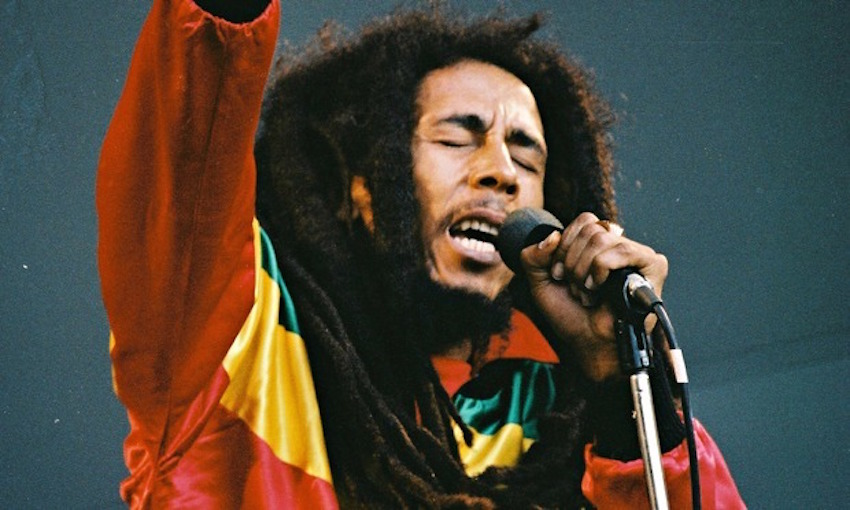
Reggae music originated in Jamaica during the late 1960s. The music resembles its targeted country in a way that no other genre succeeds in doing. It presents the dangers that engulf the country’s culture, both politically and geographically. It is linked to the theological ideologies of the country’s founding religion known as Rastafari. In fact, oftentimes reggae musicians are understood as vital messengers of the religion’s message.
When thinking of this format of music, there is one face that trumps them all. That is the face of Bob Marley.
Marley passed away nearly 40 years ago due to melanoma, which is a deadly form of skin cancer. Yet his message and image has never disappeared; rather it has dispersed. He is not only the face of reggae music, not even simply the face of his home country of Jamaica. Rather, when picturing Marley he is next to the faces of figures that helped shape diversity to a commonplace theme rather than a subjective idea, such as the likes of a Martin Luther King Jr., Malcolm X or Barack Obama.
His music represented peace, and it caught fire early. He began playing reggae music with his band the Wailers when Marely believed that his previous music, which could have categorized under the genre of ska, was holding his artistic vision back. The category of ska was seeing far less rhythmic influence, and it was not allowing him to express his religious guidance in his work, as Marley had become an avid follower of Rastafari during the transition.
The group’s first album that was released following the reggae transition was “Catch a Fire” which is considered an absolute landmark for the genre. It was the first complete and cohesive reggae album, and it led to several great works throughout the next several years with “Burnin’,” “Rastaman Vibration,” “Natty Dread” and others. All critically-beloved, Marley was already established at this time as a music icon, but more importantly the message behind these albums was eager. According to Marley, a change in Jamaica’s political system was needed desperately.
As most progressive opinions tend to do, there were political powers who found his movement dangerous. This led to violence, with the danger reaching its peak in 1976 as Marley and his family were attacked by a crazed gunman on his own personal property. No one was murdered by the act, but it happened before a concert known as “Smile Jamaica,” which was a free concert that was meant to ease political tension between two warring groups.
The attack led Marley to move to England for self-imposed exile from Jamaica. He recorded and released two albums known as “Exodus” and “Kaya” during that transition, and both were commercial successes. Yet in many ways the politically-driven flair that made Marley so well revered was put on hold. His music was not driven by frustration and eagerness, instead it was influenced by community and peace. By love and acceptance.
What does all of this mean? This shows that Marley was far more than a musician, he was a political figure. He was a humanitarian. He was a protester. He was an individual who used his platform of music to express something more important than himself.
But no, Marley was not someone who was a dreamer. He didn’t believe that peace was easy to come by, and these beliefs were presented in his music. Sometimes, people ignore this truth. Rather, his music was presenting the awful nature of the world around him, and somehow he expressed it in a way that wanted you to nod your head in pleasure.
The music was soothing and enjoyable, yet told the tale of a man who had been tortured through his past and current experiences. And Marley did it with such passion and conviction. He was the voice of those who were voiceless. He was a leader, and an artist.

 The Beat @APU