Some of America’s top high school talent won’t be dancing next March. One of those players is the No. 1 player in the 2020 class, Jalen Green. On Thursday he made the decision via an Instagram Live video to forgo College to play in the NBA’s minor league affiliate, the G League.
This move breaks the landscape of developmental basketball. Green is the first to take this professional opportunity that the G League is offering. Before going into how this affects the college basketball landscape (and you bet it does), let’s talk about how Green got here.
Green has been regarded as a top five player in his class since he was a freshman in high school. I watched him play in person when he was a rising sophomore and it was a sight to behold. His leaping ability combined with skill and size made him unguardable.
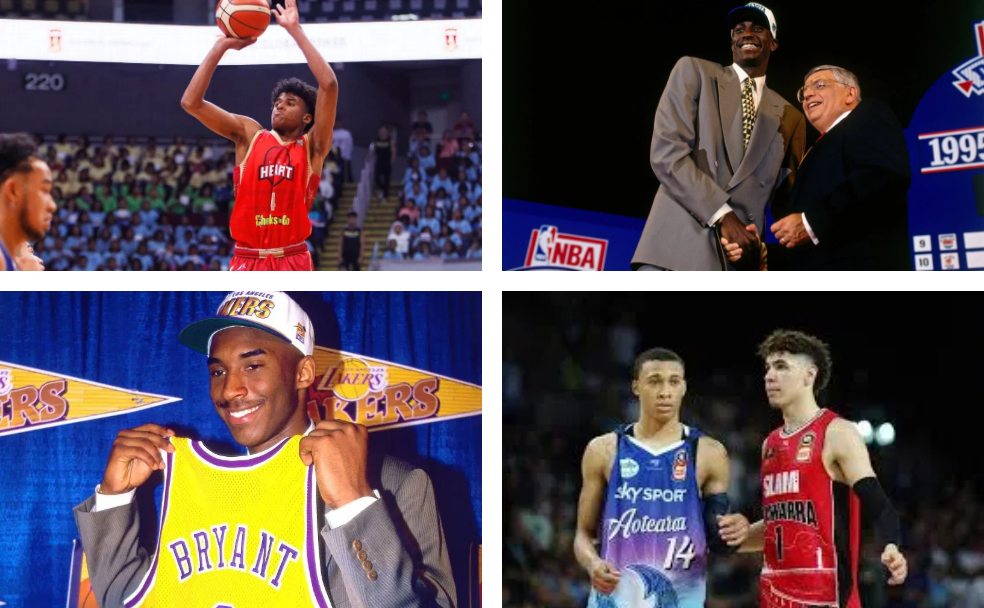
Not much has changed for Green, he’s improved his outside scoring over the years and has frequently drawn comparisons to the late Kobe Bryant. He’s held offers from every major college program in the country. He said in an interview with Yahoo sports that playing for Penny Hardaway at Memphis would have been his choice had he decided to go to college.
Sorry Tiger fans.
Bottom line, he’s the real deal.
Green is not the first highly ranked prospect to take his talents to the pros. In 2008, Brandon Jennings signed a $1.65 guaranteed contract with Lottomatica Roma in Italy and became the first american born player to go straight from high school to the pros. Jennings was the No. 1 player in his class and was drafted by the Milwaukee Bucks a year later. In 2014 Emmanuel Mudiay went to China for a season before declaring for the NBA draft.
This past season, LaMelo Ball and RJ Hampton made noise when they signed with teams in Australia’s National Basketball League (NBL). Ball, the younger brother of the pelicans’ Lonzo, had a phenomenal year with the Illawarra Hawks where he averaged 17 ppg, 7 ast and 7 rebs. Hampton played for the New Zealand Breakers and averaged 9 ppg. Ball is a projected top 5 pick and Hampton a mid to late first rounder in the 2020 draft.
The message is clear, top high school prospects are tired of the NCAA’s rules that forbid them from getting paid as collegiate athletes. The NCAA has taken steps to alter their amateurism model to one that allows athletes to profit off image and likeness but it’s too little too late.
In the NBL, draft eligible players such as Ball and Hampton were paid 100,000 Australian dollars (approximately $78,000 U.S.). The G League is determined to top that amount to keep american prospects in the country. The developmental system they have in place will reportedly pay prospects up to $500,000.
Along with the $500k, Green’s deal includes being a part of a new team in Southern California that will feature him as the centerpiece. This is an attractive offer for an 18 year-old that’s being compared to Kobe.
The current NBA draft model requires players to be either 19 years old or one year removed from high school. Before that, players such as Bryant, Kevin Garnett, and LeBron James made the jump from high school to the pros and had decorated careers.
As times change the NCAA needs to change as well. The top players aren’t going to lineup to play at Kentucky, or Duke if they aren’t going to be paid what they’re worth. The NBL has seized this opportunity and profited off of Ball and Hampton’s success. The NBA is trying to match this by taking advantage of it’s developmental league.
For the NCAA to keep their stars, it’s very simple…
Pay the players.

 The Beat @APU