
Kenny Sailors, a pioneer of the jump shot, has a legacy that lies beyond the basketball court.
There’s no question that basketball, in modern times, has never had a shortage of stars or epic and historical moments. There’s Christian Laettner’s “The Shot” which took him and his fellow Blue Devils to the Final Four of the NCAA’s March Madness in all of 2.1 seconds. And let’s not forget when Kobe Bryant dropped 81 points on the Toronto Raptors to stand only behind Wilt Chamberlain with the most points scored in a single game. And there are almost too many great career highlights to count from the game’s best like Kareem Abdul-Jabbar, Larry Bird, Michael Jordan and LeBron James.
Yet, when the basketball world thinks of its heroes, superstars and trail-blazers, one name is almost guaranteed to be left not out of not only the conversation but out of mind: Kenny Sailors.
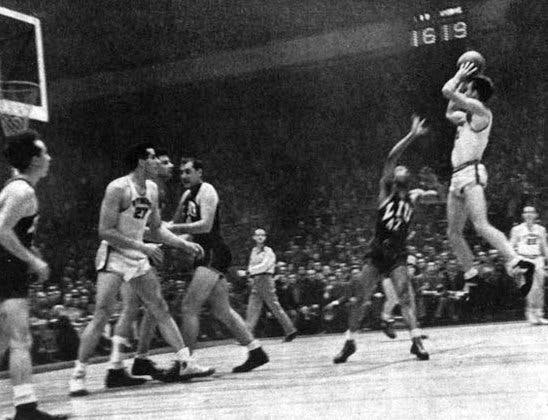
Sailors, the subject of the documentary “Jump Shot,” is credited as a pioneer, and maybe even the creator, of the jump shot. Because, believe it or not, there was a time where the staple shot wasn’t apart of the game. He’s quick to brush aside any implication that he was the first person to leave the ground to make a basket but he does admit he worked hard to perfect its artform.
“Jump Shot,” directed by Jacob Hamilton and backed by Stephen Curry as its executive producer, aims to introduce the basketball world to one of its greatest trailblazers. But, it’s obvious the jump shot, basketball and fame are second-tier concerns for Sailors.
Sailors played basketball for the University of Wyoming, where he, and his jump shot, led the Cowboys as MVP to a championship in 1943. Just two short weeks later, he would join the U.S. Marines to serve in World War II. When Sailors returned from the war he began his NBA career where he would stay just long enough to collect a pension. Then, in a move that would categorize as unthinkable today, left for Glennallen, Alaska.
And there, in the small town of Glennallen, I, and possibly Sailors, believe his greatest legacy lies. To me, his legacy lies in his efforts to grow the game of basketball at the high school level for both boys and girls. And to take his impact a step further, his work to open the game to people of color.
“Jump Shot” dedicates a decent portion of its runtime to Sailors’ life in Alaska. His move was prompted not out of want but of necessity as his wife, Marilynne, needed to stay out of populated and polluted cities due to health concerns. But Sailors loved life in the outdoors where he could hunt, fish and be the ultimate outdoorsman.
And when he wasn’t chopping wood or hunting moose, Sailors was teaching and coaching at the local high school. He’d spend his free time traveling around the state to different schools in an attempt to persuade its administration fund basketball programs for both boys and girls. As other schools started to create basketball programs a league was born. The documentary places a special emphasis on Sailors’ time coaching the girls’ team.
In basketball’s early days, women played games 6-on-6 with only three players allowed to move on offense at a time. The reason? People didn’t want to see the girls sweat and appear tired. Plus, their weak, frail bodies couldn’t possibly keep up with the physical demands needed to play full-court, contact basketball.
When Sailors was coaching high school ball the game had evolved for women but he still had to fight to have a girls’ team. But his persistence and belief that girls deserved to play and learn from sports as much as the boys would end up being crucial in shaping the lives of his players. Several of his former players, including his daughter, share in the documentary how his decision to believe in them as athletes and competitors became a pivotal moment in their lives. Basketball taught and gave them confidence, discipline and the strength to stand up for themselves.
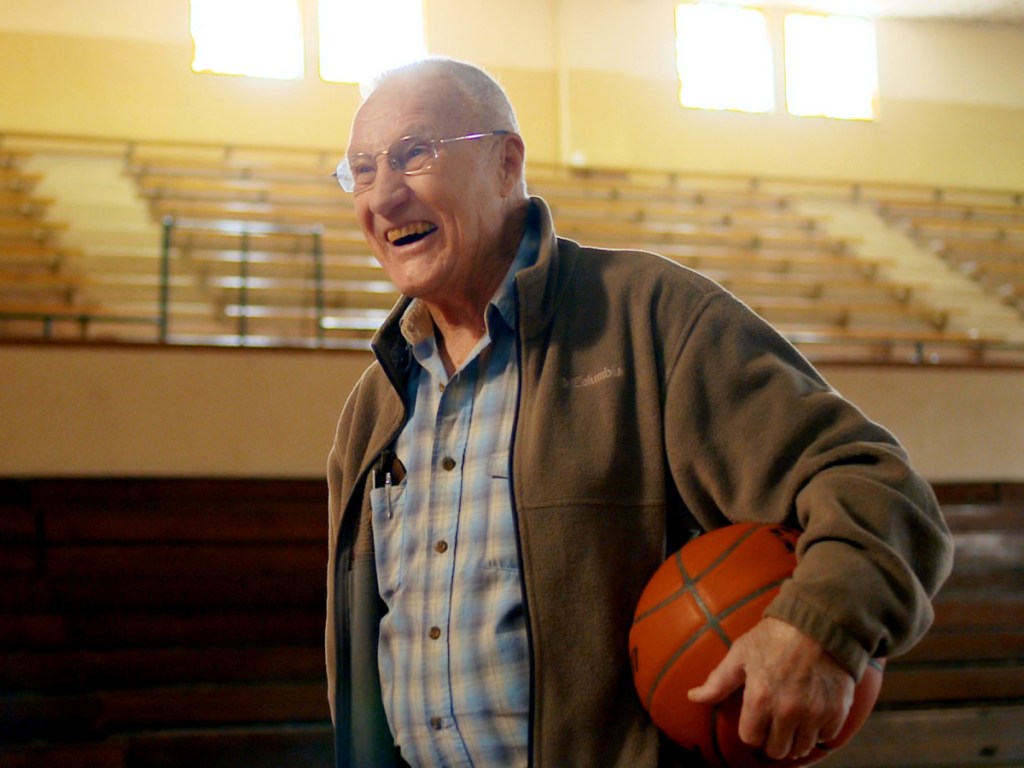
I also find it impressive how Sailors’ insisted the women’s team also be played with girls from local and native tribes. In a particularly sweet moment, the documentary shows Sailors proudly boasting about the three state championships his girls’ team won.
The life of Kenny Sailors should have already been made into an ESPN “30 for 30,” inspirational film in the style of “Rudy” and most importantly, he should already have his name listed in the Naismith Memorial Basketball Hall of Fame. Unfortunately, Sailors’ name continues to be left off of ballots year after year. And while Sailors admits it would, of course, be a dream to land his name amongst other basketball icons, he’s confident in the other areas his legacy lives in.
Sailors passed away on January 30, 2016. To Sailors, his legacy lives on through his family, time in the Marines, the rafters of Arena-Auditorium at the University of Wyoming and his impact of hundreds of high school students in Glennallen. But, like everyone who watches “Jump Shot,” I don’t think it would hurt to have his name also live on in Massachusetts.

 The Beat @APU