
Netflix drops another intriguing true crime documentary
“Night Stalker: The Hunt for A Serial Killer” reveals that Los Angeles is not just a glittering city where Hollywood stars live, but a place where real evil lives just below the surface.
The documentary establishes intrigue by opening with a VCR shot of Detective Gil Carrillo, the central figure of the “Night Stalker: The Hunt for A Serial Killer,” describing the killer. This shot establishes Detective Carrillo as the main character, not the Night Stalker, which is unusual for a true crime documentary. Through this decision, the documentary is able to truly capture the grittiness of the LA Homicide Bureau in the 1980s. Detective Carrillo’s story is framed by interviews that include Frank Salerno or “The Italian Stallion,” reporters who covered The Night Stalker and those who survived the killer.
In 1985, Los Angeles can only be described as sinister because of how brutal the Night Stalker’s crimes were. The murderer would walk into homes kill everyone and rape women and children in the process. No one was safe; he murdered regardless of age, gender and ethnicity.
“I remembered there is a deviancy that says, I like to see a frightened look on your face. I want to see you scared. That’s really what gets me turned on,” said Detective Carrillo.
Throughout “Night Stalker: The Hunt for A Serial Killer,” there is fearful suspense; however, the slow build causes the audience to lose interest at key points. A lot of energy is put into establishing an atmosphere, and other parts of the documentary suffer for it. Important information like the Night Stalker’s childhood was barely touched upon in the documentary. The director, James Carroll, left so many questions unanswered about him. Did his family life have to do with how brutal these murders are? How does a man end up so terrible? While unanswered questions are often an important part of a true crime documentary, there is an art to it.
In order to have excellent unanswered questions, “Night Stalker: The Hunt for A Serial Killer” needed to develop them throughout the story. Key themes in the documentary fell flat as a result. For example, no one knows if The Night Stalker committed more crimes than he was convicted for. The question is brought up in the last episode, but it is never fully explored leaving the effect feeling flat.
Another way the documentary fails is the way the transitions are incorporated throughout. Dispersed throughout the documentary, there were various quotes with b-roll that are used as transitions. The b-roll often doesn’t make sense, and it is unclear who has said these quotes. In the end, the documentary does imply it is The Night Stalker, as they have audio attributed to an interview done by Philip Carlo, a crime writer.
Despite these flaws, the documentary does an excellent job of highlighting the ways the system failed during the investigation. One of the most gut-wrenching parts was when the serial killer got away because of a malfunction in technology. The police department had a business card for a dentist in a car the killer had stolen then abandoned. Through this lead, Detective Carrillo and Salerno were able to get his dental records where they discovered he had an impacted tooth. The detectives were frustrated because they had been told the car would be processed, but it wasn’t. Through this blunder, Detective Carrillo and Salerno lost the opportunity to get prints off the car and missed him going to the dentist by five days. However, since he had an impacted tooth he would be back because it would be causing him a lot of pain. The LA Homicide Bureau put two officers on surveillance who were eventually pulled from because an executive believed it was a waste of money. The police department installed an alarm instead. The alarm malfunctioned and didn’t go off. When interviewed, you can hear Detective Carrillo’s frustration at the fact that the Night Stalker got away.
One of the most interesting aspects of this documentary was the way it portrays the relationship between the cops and the press. The tension is demonstrated through an incident with Laurel Erickson, a reporter at KNBC news, who finds an important clue about a shoe print the Night Stalker wears. Salerno doesn’t want her to publish anything about the shoe because they have used it to confirm it is the Night Stalker at crime scenes. So, Salerno put her through to the captain who gives her an exclusive interview in exchange for not publishing the information. This is a constant pressure point throughout the documentary until Dianne Feinstein, who was mayor at the time, revealed all of the critical information about The Night Stalker in an interview. He changed his shoes and gun after this press release.
While there is often negative tension, the documentary shows how cops use the media to their advantage. The press allowed the detectives to get a tip given to them by the son of a woman whose boyfriend knew the killer. The cops were able to get a name out of him and were able to find The Night Stalker through fingerprints that had been lifted off a car he drove.
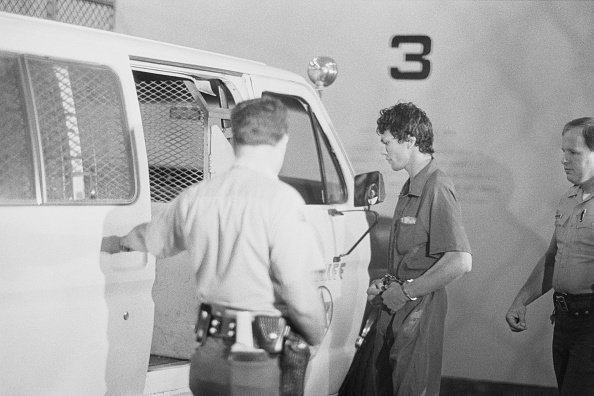
The manhunt scene is full of tension and thrill as The Night Stalker is eventually caught by civilians in a neighborhood. Once the killer is introduced, he is chilling. In court, the man talks about Satan, draws pentagrams on his hands and seems to be filled with the devil himself. It is absolutely terrifying. He was arrested on Aug. 31, 1985, and was sentenced to death Nov. 7, 1989.
As the documentary draws to a close, it is wrapped up using a beautiful parallel. In the opening, Carrillo talked about his faith. Carrillo ends it by saying, “I say prayers at night. Holy Mary, Mother of God, pray for us sinners and at the hour of our death. Amen. Glory be to the Father and the Son and the Holy Spirit. As it was in the beginning, is now, and ever shall be, world without end. Amen. Father, I offer these prayers up… And then I go on with the names, people… And… end up with… Ramirez.”

 The Beat @APU