
Socrates believed that virtue is knowledge. That, “…if you know what is right, you will do what is right. Knowing a Socratic definition is thus necessary and sufficient for moral behavior,” as paraphrased by the University of Washington.
With that same moral compass, though this blog, we will be embarking on a journey through Hollywood characters with strong moral compasses. This examination should prove that despite the looming assessment that Hollywood is a corrupt and moral-less place, certain characters’ personalities can prove to be examples of hope.
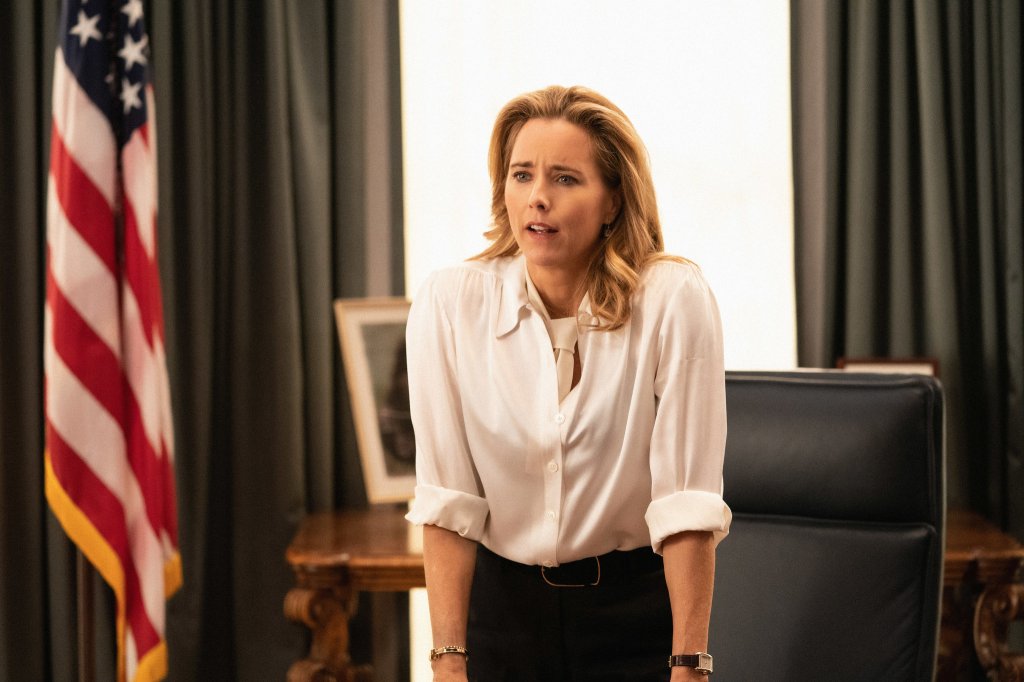
Orson Wells famously said, “Hollywood is Hollywood. There’s nothing you can say about it that isn’t true, good or bad. And if you get into it, you have no right to be bitter – you’re the one who sat down and joined the game.” This blog chooses to survey the good, starting with Elizabeth McCord’s character in CBS’s Madam Secretary.
Madam Secretary aired from 2014 through 2019 with 120 episodes and 42-46 minutes each. Starring Téa Leoni, IMDB describes the show as “A political drama which looks into the life of the Secretary of State as she tries to balance work and family.”
With media algorithms being the way that they are, I had no idea this show existed until I walked in and saw my mother watching the show. She asked me to sit and, “Just watch one.” Soon enough, I was utterly entranced in all six seasons because of this courageous story of leadership and love.
The main character, Elizabeth McCord, is a former CIA agent who became a Professor and eventually was asked to be a public servant, with the Secretary of State position. Her husband, Henry McCord, played by Tim Daly, is a former Marine turned Professor and renowned scholar of ethics and religion. Throughout the series earns roles as a critical member of US government intelligence and ethicist. Together, they are the very definition of a power couple.
Elizabeth (mainly) and Henry McCord together are the virtuous characters taking center stage in this post. The Secretary of State deals with foreign policy, and nearly every episode is the epitome of the world’s greyness. Impossible situations and injustices being dealt with are what Elizabeth McCord is faced with daily. Her husband, the ethicist, often acts as her mentor and ethical guide through the greyness.
When faced with a crisis, Madam Secretary acts. In season three, episode one, directed by the great Morgan Freeman, Elizabeth McCord is faced with climate change. Politicians and American businesspeople advocate for natural gas. Knowing its effect on the earth, she advocates for policies that lift alternative energy sources, despite pushback that the guidelines could jeopardize the president’s re-election.
By going against the status quo, McCord advocates for the greater good. Something that she does every single time. Upon hearing about the idea for a new policy regarding climate change, Madam Secretary says, “A good idea is meaningless without the courage to act.”
Madam Secretary’s heart beats for the underdog; she chooses to act courageously and risk it being thrown in her face in messy situations. Often, she assesses problems and seeks to favor the “greater good,” even if that means a devastating present-day human cost and eventual humankind benefit. Arguably this could be seen as a universalism view, in which it’s a concern is, “‘the greatest amount of good for the greatest number,” as the University of Stanford defines it.
I’d argue that Madam’s moral compass is concerned with compassion more than it is concerned with following one view of philosophy. In each situation, from human trafficking, racism, climate change, and romance, Madam Secretary leans in with bravery and is the embodiment of true modern-day heroism.
Stream Madam Secretary on Netflix or CBS all-access.

 The Beat @APU