
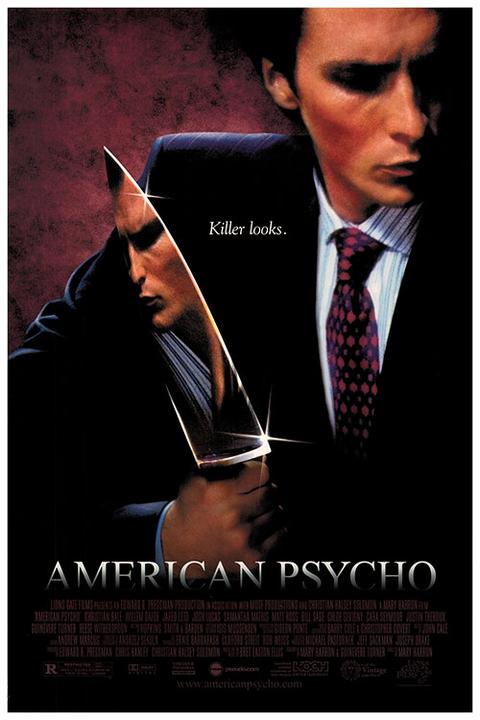
Mary Harron’s 2000 ultra-black comedy slasher film “American Psycho” explores the depraved and cruel serial killings of a young Wall Street investment broker, Patrick Bateman, portrayed by Christian Bale. The film is based on the 1991 novel of the same name by Bret Easton Ellis.
The film and novel are not only an exploration of the thoughts and motivations of a serial killer, but also the 1980’s yuppie culture which was synonymous with extreme levels of hedonism, greed, materialism, egotism, and consumerism. Although placed in the 1980’s, the film continues to ring out truth in the presentation of a world of greed and consumerism, one we still live in today.
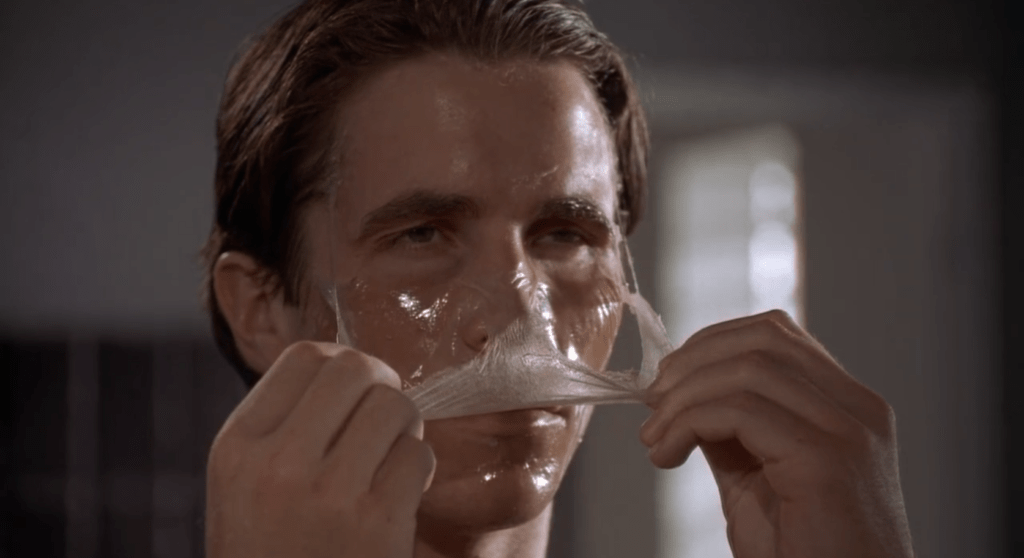
The film also places a strong emphasis on the conformity that follows yuppie culture and its isolating effect, which ultimately motivates Bateman to commit murders as an act of rebellion against conformity. Despite “American Psycho” focusing mainly on 1980’s yuppie culture, it can still serve as a cautionary tale of the effects conformity and consumerism can have on an individual’s psyche.
The yuppie culture Bateman finds himself confined and surrounded in plays a significant role in his slipping sanity and dissatisfaction with life. Bateman’s insanity heavily distorts his perception of reality which contributes to the movie’s overall ambiguity of Bateman’s true actions, effectively defining him as an unreliable narrator. The film does an excellent job of portraying all the aspects of yuppie culture that contributes to Bateman’s insanity through the use of set design, cinematography, supporting characters, and dialogue.
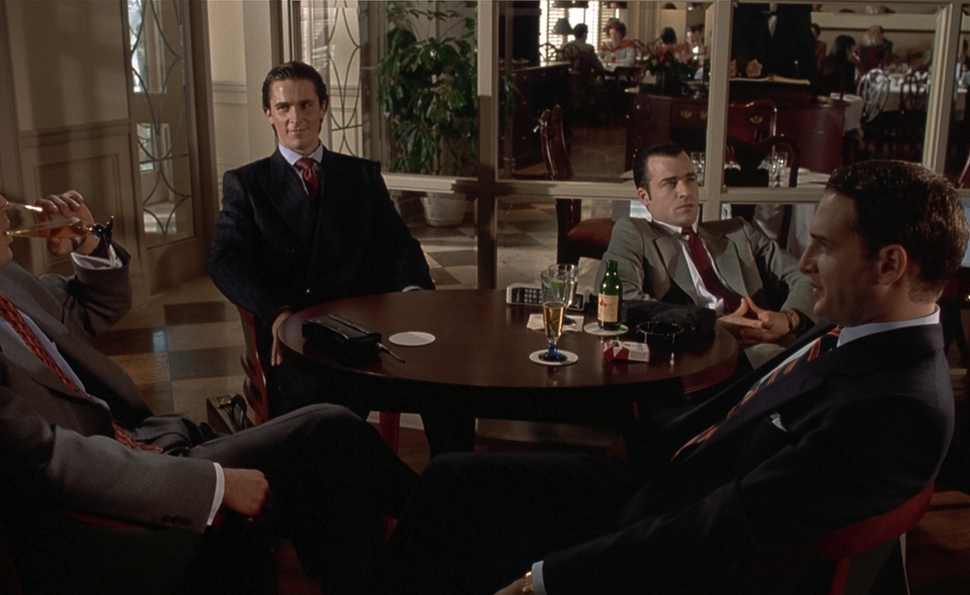
The application of set design and cinematography form a symbiotic relationship which perfectly show the world Bateman is surrounded by. Scenes in which Bateman is applying skin care products, going to restaurants, and going to dance clubs are clad with logos and brands. The surrounding characters are all dressed in extremely expensive business suits, accessories, and jewelry, while the main background colors consist of monochrome colors such as grey, black, and white.
What ultimately highlights all these set details are the main use of medium and medium close-up shots. The film rarely uses close-ups or extreme close-ups, unless used specifically to capture Bateman’s thoughts, narrations, and expressions, otherwise the majority of the shots place a strong emphasis on capturing the materialism and consumerism that surrounds Bateman and creates the status quo that he feels confined in.
Design also defines the characters that interact with Bateman. Like Bateman, they all wear the same expensive business suits and same accessories, due to this, characters commonly confuse each other with other characters, driving forward the sense of conformity and loss of identity by trying to blend in with those of high social standing. All of Bateman’s co-workers and colleagues are obsessed with wealth, materialism, and hedonistic activities. They are also extremely egocentric, so much so, they do not even notice Bateman’s multiple nonchalant confessions about his rampant murders.
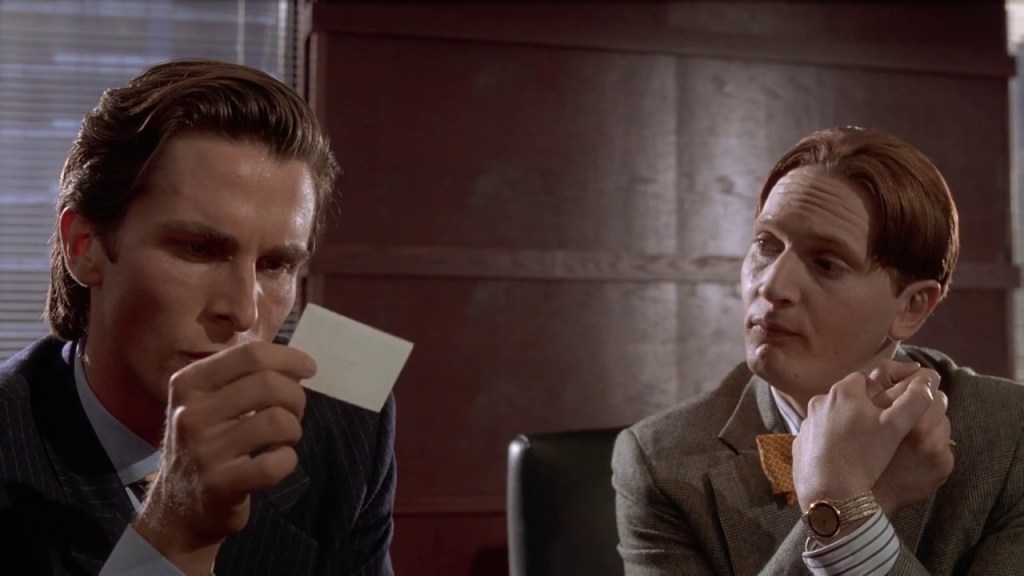
Despite some of them being his friends, they partially serve as antagonists towards Bateman. They constantly compete in social status, flaunting dinner reservations at exclusive restaurants, comparing business cards, comparing haircuts, and other material items to put themselves above each other. They even compare the attractiveness of their relationship partners, showing how women are seen as nothing more than commodities amongst their male dominated yuppie culture.
However, the dialogue is the key aspect of the film that reveals the most about the implicit themes of the film. Throughout the film, Bateman gives multiple monologues about himself and the lack of emotion he feels towards anything. In the opening monologue, he introduces his place of residence before himself, putting his social status above his own identity. He reveals his motivations for murder are the only form of carthasis and self-expression as an individual he has left. This is apparent due to how numb he has become to other hedonistic activities such as drugs, fornication, and excessive spending. He routinely goes on long rants about music, trying to flex his intellectual muscles for others, an attempt at flaunting his intelligence and presenting himself as an individual. However, he feels most free when murdering others.

Yet, by the end of the film, he reveals he has gained no deeper knowledge of himself and ultimately still feels nothing. He is still trapped in the confines created by the society around him, and although he confesses his murders to multiple individuals, no one around him seems to care. Although Bateman is clearly a demented and deranged individual, “American Psycho” shows how a society of conformity, greed, hedonism, and status can make us all a little psycho.

 The Beat @APU