
James Franco’s performance in the World War I film showcased a philosophical view of war and the ideal soldier.
War. It’s tragic yet sometimes necessary. World War I saw the death of over 16 million people, both soldiers, and civilians. Films made about said war grapple with death, loss, and the importance of serve. On the world stage, civilians who became soldiers to fight the good fight for justice are heroes. Their legendary actions serve as proof of Aristotle’s view of war and the ideal soldier.
Aristotle acknowledged such soldier heroism often, “In both “Politics” and “Nicomachean Ethics,” Aristotle maintains that war is a natural instrument for establishing a government over barbaric societies.”
He went on to articulate the virtues of an ideal soldier, “A statesman can achieve this through the command of four qualities: fairness, courage, moderation and prudence. Even if he is engaged in war, he should be guided by the general principles of virtue.” per academic report.
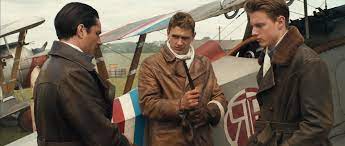
Those four qualities were emulated to the utmost in “Flyboys” through Blaine Rawlings’ character, played by James Franco.
To preface, the film “Flyboys” was made in 2006. James Franco was a hot ticket actor, and the script allowed his character to have charisma, a charming love interest and an incredible ability to fly dangerously simple planes.

For those that have not seen this tremendous perspective of war, “Flyboys” is about “The adventures of the Lafayette Escadrille, young Americans who volunteered for the French military before the U.S. entered World War I and became the country’s first fighter pilots.”
Based on the true story of Lafayette Escadrille came the character of Blaine Rawlings. His backstory consists of losing his family ranch, seeing a commercial to fly airplanes for a cause and feeling the call to action and adventure.
Throughout the film, we see Rawlings grow in character and perspective as he faces the harness of war, the turmoil of losing loved ones and the realization of purpose. Rawlings’s actions throughout the film showcased that he embodied each of these virtues.
FAIRNESS:
When he is put into his French quarters, he becomes roommates with a Black man named Eugene Skinner. Systematic racism runs throughout the camp in which they train, but Rawlings does not let it affect his relationship with Skinner. The two become friends and they do not discriminate against each other; instead, they see each other as fellow soldiers, as they should.
COURAGE:
I don’t think there is such a thing as a war film that does not display courage, yet “Flyboys” does it exceedingly well from my perspective. When the enemy begins to impede on the base, rather than fleeing for his safe quarters or leaving on a plane, Rawlings goes back to the local village. His love interest, Lucienne, and her family are brought to safety thanks to his bravery.
MODERATION:
Early in the film, when the pilots are still learning the ropes of flight, they take advantage of their breaks and visit the local house of prostitution in France. Rawlings never engages in the advances, as he shows moderation. Even in the extremes of war, he does not implode those same extremes into relationships. He does meet his love interest as a result of abstaining.
PRUDENCE:
Balancing prudence and courage is a difficult act for any soldier in the heart of war. Rawlings again exhibits an understanding of this, although slightly. In battle, he flies the newly invented planes of the time. Yet when his fellow soldiers go down in battle, he knows when to retreat and go back to base. This knowledge is what allows him to live and to continue to serve.
In all, “Flyboys” is rated poorly on Rotten Tomatoes with 33%, with so many war films winning Oscars, this one is often poorly reviewed. However, Franco’s moral compass and virtuous endeavors make it one of my personal favorite war films.

 The Beat @APU