
Mel Gibson’s “Braveheart” has more to do with courage than bravery.
Bravery is defined as “the quality or state of having or showing mental or moral strength to face danger, fear, or difficulty: the quality or state of being brave: courage” per Merriam-Webster dictionary. The idea that the 1996 film “Braveheart” is more about courage than bravery because bravery can often act on both the good or bad, yet courage is the model of moral excellence, fending for the moral good.
By this definition, the story of “Braveheart” is genuinely about courage.
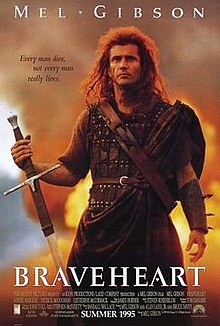
The notion of courage is explored in great depth in Mel Gibson’s film, which won Best Picture at the Academy Awards in 1996. The coveted prize was well earned, and I was shocked after watching the film that it won best picture.
The picture was glorious – with its outstanding landscape cinematography and daring characters – like the majority of the award winners. Unlike most winners, however, the story inspired me to want to be a better human being. So often do we see films that have phenomenal storylines, yet lack a virtuous takeaway. This film is the bold exception.
If you are like me, “Braveheart” was on my must-watch list for years but was daunting to watch as it is two hours and fifty-eight minutes long. For those that have seen it and need a refresher, or for those who haven’t invested the time into watching it, the film “Tells the story of the legendary thirteenth-century Scottish hero named William Wallace (Mel Gibson). Wallace rallies the Scottish against the English monarch and Edward I (Peter Hanly) after he suffers a personal tragedy by English soldiers. Wallace gathers a group of amateur warriors that is stronger than any English army.” per Rotten Tomatoes.
Wallace is the center of the virtue of courage we’ll explore. After witnessing the horrific wrongdoing of King Edward I, which murdered Scottish people- including his wife – and put them under his reign, he chooses to fight for his land, his people, and ultimately for justice. The story is a classic depiction of the biblical David versus Goliath story, Wallace (Gibson) being David and Goliath being the English army. Although the story errs on the side of historical inaccuracies when being told, it also is a pep-talk type of film. One that is quoted when people need to believe in the good of the world.
Some of the best quotes come from Wallace. When he is about to go into battle to fight for his homeland, he tells the troops, with passion, “Aye, fight and you may die. Run, and you’ll live… at least a while. And dying in your beds, many years from now, would you be willin’ to trade ALL the days, from this day to that, for one chance, just one chance, to come back here and tell our enemies that they may take our lives, but they’ll never take… OUR FREEDOM!”
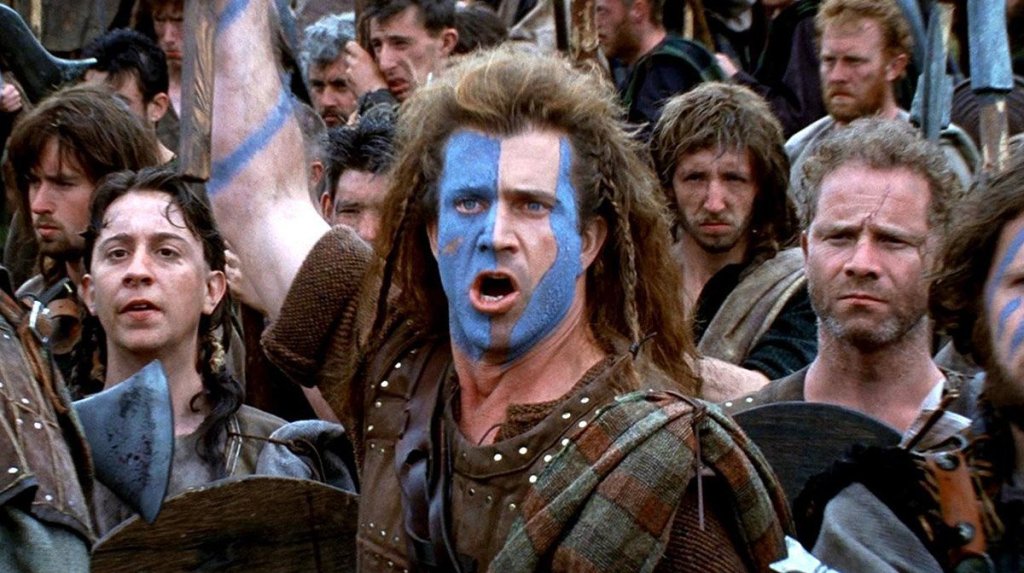
The courage Wallace promotes through the film echoes that of Aristotle.
“The Greek philosopher Aristotle believed that courage was as a virtue – a marker of moral excellence. More specifically, it was the virtue that moderated our instincts toward recklessness on one hand and cowardice on the other,” said Matthew Beard for The Ethics Centre.
Beard went on, “[Aristotle] believed the courageous person feared only things that are worthy of fear. Courage means knowing what to fear and responding appropriately to that fear. For Aristotle, what mattered isn’t just whether you face your fears, but why you face them and what it is that you fear.”
On the spectrum of recklessness and cowardice, the middle aim of “moral excellence” is courage. Wallace demonstrates his courageous excellence by facing his fears, not because he is afraid, but because his nation’s freedom was at stake. Wallace’s speech to the troops before battle showcases this, “…they may take our lives…” showcases the fear of battle. “But they’ll never take our freedom!” showcases the correct virtuous response towards courage.
Throughout the film, all three hours of it, it seems to explore virtuous living. Wallace lacks selfishness, as he fights for more than justice – but for freedom. As his family and loved ones are all dead, with nothing to gain, he chooses to live his life for his nation, a soldier, a leader, and an inspiration for us all.
Although the film is not available on any streaming site for free, it’s a must-watch for the price of a $3.99 rental on Amazon Prime Video or Youtube.
It’s been a pleasure watching and discussing virtues within characters in cinematic experiences. I hope that we all get the opportunity to live out these virtues and become people of good moral character in an era that often lacks principles. Let’s be the change we wish to see in the world, like Wallace.

 The Beat @APU