
You think you know the hit tv sitcom “The Office” until you read Shea Serrano’s work of art.
Although the show has been off the air for nine years now, “The Office” remains a classic reminder that dry humor is the way to a young adult’s heart. It’s not “Friends,” it’s not “The Big Bang Theory,” it’s not “Seinfeld.” It’s a unique series that pushes the uncomfortable to a degree much worth your time.
In “Conference Room, Five Minutes,” a recollection of essays analyzing the ins and outs of “The Office,” Serrano feeds us all the secrets you may not have caught on a first glance. Who knew the basketball game from episode five of season one could take seven pages to unfold? Who knew Jim and Dwight’s characters were more than just office enemies? Who knew Pam and Michael saved each other in a moment of need?
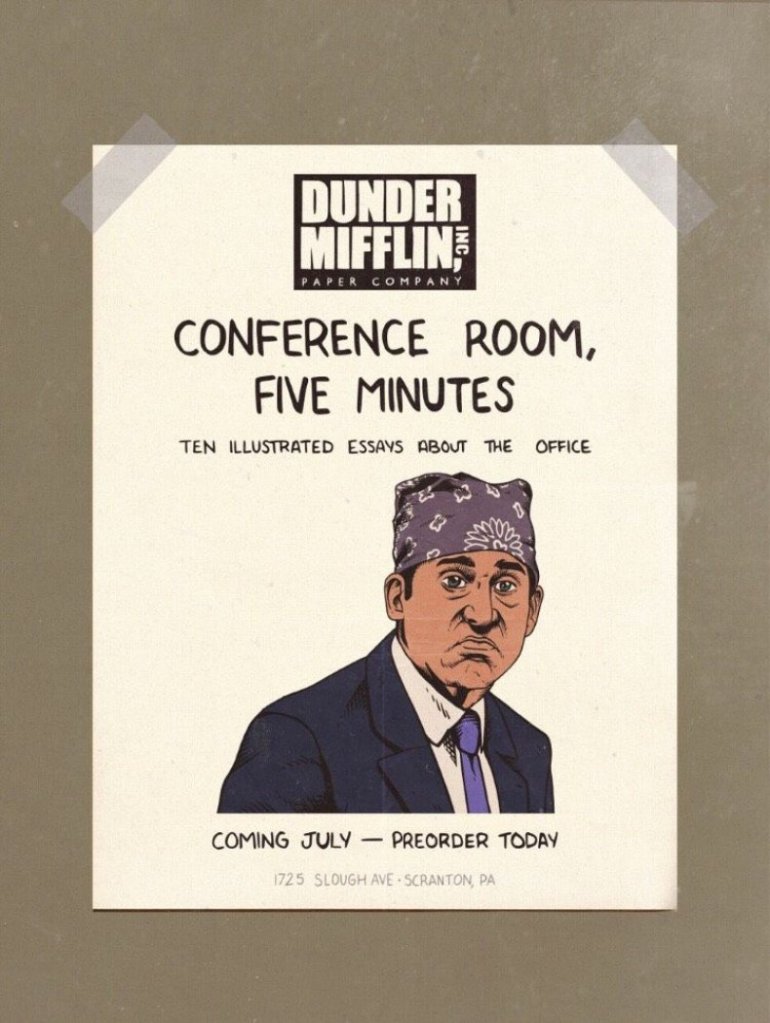
Serrano details the show in ten separate essays, highlighting specific episodes and moments that any real fan would remember instantly. But as an avid fan myself, I never analytically considered the series. I took the humor for what it was, and it made me laugh, and that was it.
You might as well call Serrano “The Office” know-it-all because she does know it all. The coolest part is that only true fans of the show would understand her lingo and language. On top of her amazing written portrayal of the show, there are also unique illustrations by Arturo Torres that bring it all together.
Here is why any fan of “The Office” needs to read “Conference Room, Five Minutes.”
It’s hilarious.
In the first essay, Serrano equips us with a most unusual recap of the basketball game in episode five of season one. It’s the office verse the warehouse, and it’s a pretty heated game. Any fan would remember the competitive atmosphere and unapologetic language.
Now how Serrano goes about describing this episode is truly unique. She literally gives a scouting report on each player, breaking down their role in the episode and how their character develops. Someone who has never watched the show would probably feel confident about each character’s role from reading the first essay. Her play on words and hidden innuendos make this essay a great one.
Essays two, three, and four are all unique in their own way and are centered on episodes that were game-changers for the show.
We learn that “The Convict” episode, better known as “Prison Mike,” was one of the boldest yet most impressive uses of humor on NBC at the time of its release. Serrano gives readers a character study and brilliantly breaks down the episode’s plot, depicting Prison Mike all too well.
In essay three, “The Perfect Heist,” Serrano again delves into the show’s main characters by creating a heist group she compares to three films: “Ocean’s 11, 12 and 13.” Every character in the show has a role and she uniquely defines those roles. At this point, you can agree that Serrano is obsessed with character development and is very open about it.
Essay four recalls the exquisite relationship between Dwight and Jim and gives an account of what Dwight is usually up against in the office. More often than not, it’s everyone and everything against Dwight. I love Serrano’s efforts in highlighting Dwight’s character; after all, you may not love him, but “The Office” would be nothing without him.
It’s brilliant.
Essays five, six and seven are fantastic. They probe you to explore topics of the show you probably never wondered about before.
Five and six follow a unique trend in which Serrano throws out the question, “Which scene from ‘The Office’ that we know for sure happened but never actually got to see would be the most fulfilling to watch?”
She goes as far as awarding medals to specific moments. This is an excellent way to encourage people to think more about the show and explore topics that weren’t a part of the filmed scenes. It truly makes for a great read.
Essay seven gives a full-blown layout of the inside of Dunder Mifflin. There is even a sketched drawing depicting where each character sits. I assure you, if you’ve never seen the show yet, you may feel like you know it all after these essays.
It’s heartfelt.
Essays eight, nine and ten emphasize a more empathetic approach to the show, highlighting the show’s romantic side and which characters’ relationships are actually worth considering.
Two important characters Serrano talks about in these last three essays are Pam and Jim. If she didn’t include their relationship in the essays, fans would be disappointed. Whether anyone believes so or not, Pam and Jim were the main lovers of “The Office.” They were the perfect combo for the mix of dry humor that the show revolved around.
But Serrano doesn’t tell us exactly what went down in their relationship. She uniquely describes both of them as individuals and lets us decide what we want to do with them.
“Conference Room, Five Minutes” is a perfect read whether you’ve watched “The Office” or not. It offers fans an analytical view into the show’s deepest heartfelt scenes while bouncing off of the quality humor the show is known for. I recommend it to anyone interested in learning about the show or to any diehard fan eager to keep the heart of “The Office” alive.

 The Beat @APU