
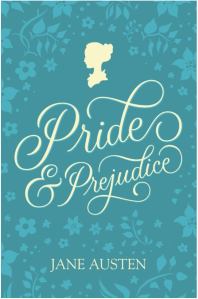
Jane Austen is the feminist hero we all need. Drama, deception, and corrupt money schemes might sound like the latest “Mission Impossible” movie, but this is the plot of “Pride and Prejudice,” the novel written by Jane Austen.
Surprised? Don’t be. Period pieces are often overlooked by readers, but they are absolute gems full of riveting plotlines. Pride and Prejudice is normally read in high school AP English, and stepping back from an academic mindset allows a reader to dive into underlying themes for what they are.
“Pride and Prejudice” is told from the perspective of Elizabeth Bennet (Lizzie) who lives in a humble house full with other sisters. I imagine that Jane Austen saw herself in this character, perhaps one of the reasons it is so personally written.
In this case (and most) the book is definitely better than the movie. The recent movie with Keira Knightly shows the perspective of all the characters, while still centering around Lizzie. Whereas the book shows the open mind of Elizabeth Bennet, souly written from her thoughts alone.
Jane Austen herself was never married, and often uses strong female characters to challenge what is “right.” The plotline follows Lizzie’s navigation through the trials of financial and social hierarchy. She goes through the societal pressures to marry into a wealthy family, and ends up refusing two men, to her own mother’s dismay.
“Vanity and pride are different things, though the words are often used synonymously. A person may be proud without being vain. Pride relates more to the opinion of ourselves, vanity to what we would have others think of us.”
Although “Pride and Prejudice” is one of Jane Austen’s most known works, she has other books published that are just as intriguing (“Emma,” “Sense and Sensibility,” “Persuasion”). Her wit is unmatched as one of the few successful female authors in the 18th century, a time where gender roles were a plague to society. Jane Austen is often compared to other female authors. Emily Dickonson has similar stories of family hierarchies, and is often called the female Charles Dickens.
The period piece-loving community is fierce, but there is general agreement that “Pride and Prejudice” stands out among the other similar novels. At first glance, the novel may seem like another romance, but there are many underlying themes that exemplify Jane Austen’s true spirit.
During the time of Enlightenment, the concept of marriage began to shift thank’s to passionate writers like Jane Austen. The tale is one of the first that encourages marriage to be seen as more than a legal transaction. This is a concept that Elizabeth Bennet wrestles with, determined to stay alone while her sisters are being swooped up.
“It is a truth universally acknowledged, that a single man in possession of a good fortune, must be in want of a want.”
Mr. Darcy is the brouting, unable to speak his true emotions male protagonist who has caught Lizzie’s eye. The miscommunications between the two are rooted in moral differences on the surface. Elizabeth Bennet is a stubborn, blunt character in a time where women were expected to be quiet and corporative. In contrast, Mr. Darcy holds similar qualities but is seen as assertive and mysterious.
“Pride and Prejudice” is more than a boy meets girl romance. Jane Austen used her characters to expose the woes of being a female in the 18th century.

 The Beat @APU
An amazing synopsis! One of my favorite movies of 2019! Best part of seeing this movie, I saw it with my family over Christmas Vacation! Memories❤️
LikeLike